
Why You Should Learn Everything
Oppenheimer, polymathy, and good books

I stumbled on the term “polymathy” recently in this video from documentarian James Jani, and I very much relate to the points he makes. The Oxford English Dictionary defines “polymath” as: “A person of wide knowledge or learning; a person well-versed in a variety of subjects or skills.” For as long as I can remember, I’ve been interested in basically everything, which in the past I’ve felt was more a bug than a feature.
I wrote a little about polymathy in this newsletter, and I’m contemplating what this looks like in practical life. What are the benefits and applications?
This is something I’ve been thinking about for a long time (long before I realized this is called polymathy). It started when I read the book Range. The author makes a solid case that some of the most influential and important figures in history dabbled in areas well outside the fields they are known for. His point is that bringing together a diverse range of knowledge creates fertile soil for new discoveries and innovations.
I noticed a good example in my recent deep dive into the life of Robert Oppenheimer. I read the magnificent biography American Prometheus and was struck by how Oppenheimer truly embodied the term “polymath.” He was an accomplished nuclear physicist, but also extraordinary administrator. He spent weeks riding horses deep into the New Mexico desert, yet regularly took part in high society life. He consulted the highest government officials in the world, while also being an experienced rancher. He spoke many languages, had an extensive knowledge of classical literature, and a wide understanding of the arts. All this took a back seat to his life’s greatest feat: building the atomic bomb to end World War II (a decision he struggled with for the rest of his life). He’s a fascinating and enigmatic figure, one I could write many newsletters about.
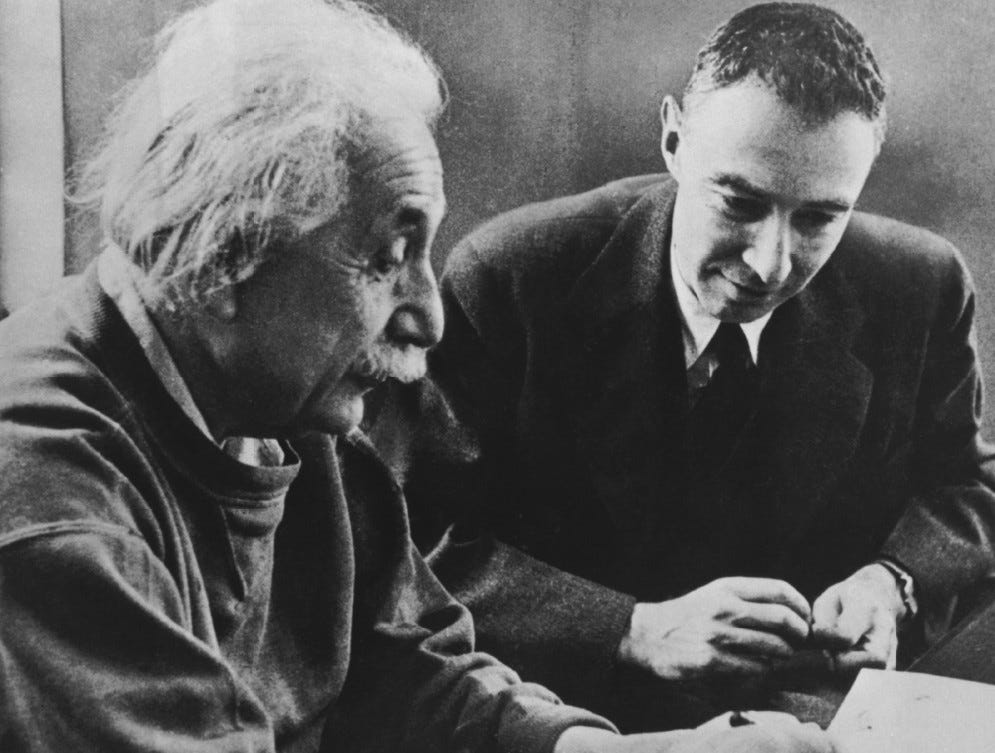
The point is, knowledge doesn’t exist in a vacuum, but is related and connected to many other pieces of knowledge. It’s tempting to think of the world in simple, clean terms. But the world is complicated, nuanced, and mysterious (and oftentimes messy). When we think of a piece of knowledge in isolation, it is easy to miss the complex web that each piece is a part of.
But when we realize the interconnectedness and complexity of the world, sometimes things no longer fit into our view like we thought they did. And that can be a disorienting experience.
That’s why I believe learning widely and embracing the unknown with curiosity is important. It can inoculate us against intellectual arrogance because we see how much we don’t know or understand.
How I do this
The concept of building a second brain nicely explains how to process a wide range of knowledge. Tiago Forte’s book Building a Second Brain is a good place to start. He defines the concept as
“a single, centralized place where you store your most important information, ideas, and knowledge, so you can access it quickly and easily... It’s a digital commonplace book that allows you to offload the burden of remembering everything.”
Basically, taking notes on what you learn and storing them well for easy access. Probably one of the greatest improvements to my curiosity journey is taking notes on what I’m learning. I won’t get into the nuts and bolts since that’s not the point, but the act of writing about what I’m learning and processing has been a huge improvement for me.
I tend not to closely structure the things I want to learn but rather let my curiosity take me where it will. This can lead to all kinds of surprises; for example, I got interested in filmmaking 10 years ago, and this resulted in starting a nonprofit media organization. That’s the thing with learning new, interesting things: it changes your life in unexpected and powerful ways.
Along with this is the concept of taking smart notes, the topic of the fascinating book How to Take Smart Notes. At its core, this concept teaches that when learning something new, it is critical to not learn in a passive manner but rather to engage with the topic by writing what is being learned and teaching it to others. This reinforces the information and helps solidify it in the web of knowledge we are building.
In the end, each of us is building a web of knowledge. Some are building a weak web by filling their minds with Netflix and TikTok videos. Their knowledge is neither wide nor deep; instead, it is flimsy and thin. But others are more intentional about learning widely and deeply about the world around them, instead of burning time in endless digital entertainment.
Turn off social media and pick up a good book about a topic you’re interested in. Learn something real about the world instead of swiping through endless, mindless Instagram reels. There’s a whole universe of knowledge out there to learn; go explore it.
Stay curious, Reagan
P.S. If you found this interesting I have a podcast (called Mind Castle) with my brother where we unpack what we’re learning and explore how to use our minds better. You can find it here or anywhere you get your podcasts.
I resonate with what you wrote about feeling your broad interests were a bug, what if we actually encouraged this 'generalist' mindset in education from the start instead of pushing for hiper-specialization?
Interesting read, the philosophy at our academy (Academia Libera Mentis) is similar, in that we provide “anchors” that can be used to build a framework to connect various fields (see image). This helps in developing a wider worldview. Students use as we call it “Jules Verne” notes to assist with their journey of learning.